


Holein eating games io offline
4.41.15K Reviews
App Specs
- Version
- 3.10.1
- Updated On
- License
- Free
- Downloads
- 5,000,000+
- Developer
- "Inkos" io games
- Categories
- Arcade
- Platform
- Android
Screenshots

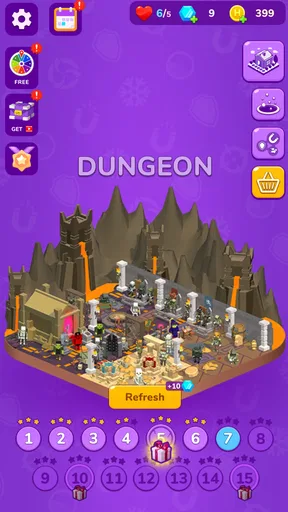

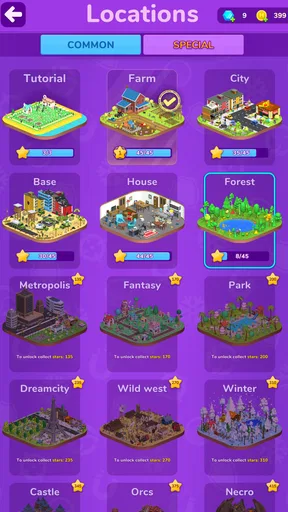
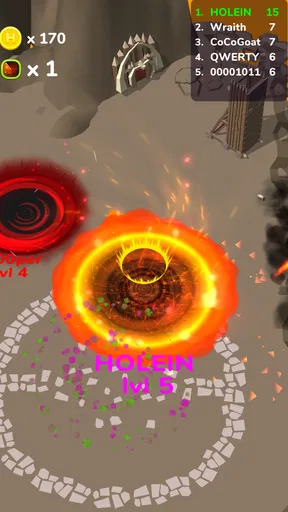

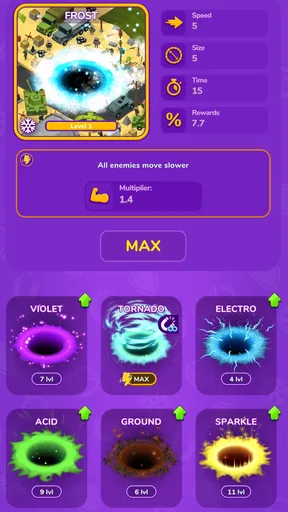
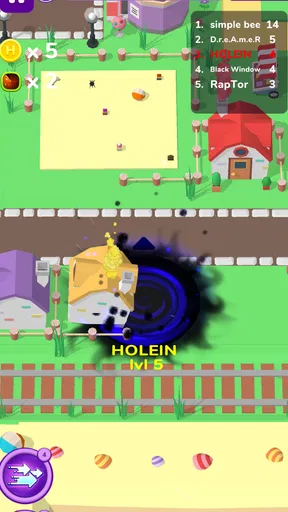
 Analysis by AppCompare
I expected Holein eating games io offline to be a simple time-killer, and that is exactly where it works best. It puts the focus on a familiar arcade idea: control a hole, swallow objects, grow through the round, and keep moving before the short burst of excitement wears off. I did not need a long explanation to understand the basic appeal. The moment-to-moment goal is obvious, which makes it easy to start when I have only a few spare minutes.
That simplicity is also the game’s main personality. This is not an arcade title I would choose for a deep story, a complicated progression system, or a demanding competitive routine. I see it more as a quick reset between tasks. When I want something I can open, play almost immediately, and put down without feeling committed to a long session, the format makes sense. The important question is whether the swallowing-and-growing loop remains pleasant after the first few rounds. In my experience, it does, but only if I treat it as a casual snack rather than a complete gaming destination.
Why the first few rounds are so easy to understand
The game’s strongest opening quality is clarity. I can recognize what I am supposed to do without studying a tutorial or learning a large collection of rules. The hole-and-filling concept communicates its own objective: look for suitable objects, consume them, become more capable, and use that advantage to continue. That immediate readability matters on a phone, especially when I am playing with one hand or checking the game during a short break.
As an arcade game from “Inkos” io games, it stays close to the quick, repeatable style associated with io-inspired mobile experiences. The free entry point helps too. I can install it without treating the download as a serious purchase decision, and the Everyone content rating makes it an approachable choice for a broad audience. The game is available without an upfront charge, although optional in-app purchases range from $0.99 to $59.99 per item, so I would still keep purchase controls in mind if children use the device.
The store page presents it as an offline battle-royale-style io game, and that offline angle changes how I judge it. I am not opening it because I want a carefully balanced online match with a large social layer. I am opening it because the central action is available when a connection is inconvenient. That makes it more useful on a commute, in a waiting room, or during a flight, provided the device and installed version behave normally in that situation.
One practical tip is to begin each round by scanning for the easiest targets instead of moving randomly. The temptation is to chase whatever object looks most interesting, but early progress usually comes from taking the safe, obvious items first. Once the hole is larger, the environment becomes more rewarding because objects that seemed out of reach can suddenly become viable. This creates a small tactical rhythm without turning the game into a demanding strategy title.
I also found that the game is more enjoyable when I avoid treating every second as a race. The visual idea encourages constant movement, but rushing can make me miss easy opportunities or steer into an awkward position. A short pause in movement to choose the next cluster is often more useful than frantic swiping. That is a specific strength of this design: it gives casual players a little room to make decisions while keeping the controls approachable.
Worth Reading Before You Choose

EA SPORTS FC Mobile 26 Is a Bigger Football Game, but It Takes Time

Flipboard Shows What News Apps Must Do Beyond the Feed

Switching to Android Auto Means Rethinking Your Driving Routine

Google Calendar Makes a Crowded Week Easier to Manage

Ludo King Makes the Most of the Minutes Between Plans

Baby Panda World Brings Quick Play to Modern Phones, but Its Game Library Feels Busy
A session rhythm built for spare minutes
The best use case is a fragmented day. Imagine waiting for a coffee, sitting before an appointment, or taking a brief break from work. I can launch the game, complete a small burst of play, and return to my day without needing to remember a complicated plot or rebuild a long-term plan. That short-session clarity is more important here than depth. The game understands that many mobile players are not looking for a second job; they want immediate feedback and a clear reason to continue for another round.
The loop has a satisfying sequence. First, I search for objects that the hole can handle. Then I collect enough to expand my options. Finally, I move through the space with a little more confidence, looking for better targets. That progression is easy to feel even when the underlying rules remain simple. Each successful swallow gives the round a visible sense of momentum, which is the kind of instant pleasure an arcade game needs.
It is also a good fit for players who prefer games that explain themselves through action. Someone who does not enjoy reading instructions can learn by trying a few movements and observing which objects disappear. I would recommend it to a younger player with supervision around purchases, to a casual adult who wants a low-pressure distraction, or to anyone who likes the familiar satisfaction of clearing a space piece by piece.
However, the same directness can limit the experience. If I want a wide variety of objectives, carefully layered challenges, or a strong sense of a world beyond the current round, this will feel lightweight. Compared with a traditional arcade game built around precise timing, it is less about mastering a difficult control pattern. Compared with a conventional puzzle game, it offers less deliberate planning. Compared with a full online battle royale, it does not give me the same social tension or long-form competitive investment. Its advantage is convenience, not richness.
That comparison helps set the right expectations. I would choose this over a more demanding arcade alternative when I have only a few minutes and want to understand the objective instantly. I would choose a deeper puzzle or action game when I want a challenge that keeps unfolding. I would choose a genuine multiplayer title when the people, rankings, or live competition matter more than the basic pleasure of collecting objects.
Returning after a pause is part of the appeal
One of the most useful qualities in a casual mobile game is interruption tolerance. I do not want to feel punished because a real-life task suddenly needs my attention. Holein’s simple structure makes it easier to leave and come back mentally, because there is no large amount of narrative context to reconstruct. When I return, I can focus on the immediate objective instead of remembering a complicated chain of events.
That does not mean every pause is equally comfortable. Arcade play still depends on what is happening in the current round, so I would not begin a session when I know I may need to stop after only a few seconds. My preferred routine is to open it when I have a modest, clearly defined window: enough time to get into the movement and finish a satisfying attempt, but not so much that the game becomes the only thing I am doing.
The offline positioning is especially valuable for this kind of return-and-play habit. A connection-dependent game can turn a short break into a loading problem, while an offline-friendly title is more likely to be ready when I need it. That makes it practical in places with unreliable service. It also means I can use it as a fallback when other mobile entertainment is unavailable, rather than relying on a constant connection for a quick arcade fix.
My advice is to treat it as a deliberately bounded activity. I would open it with a simple intention—one round, a few minutes, or a quick attempt—and then decide whether the next round still feels enjoyable. This prevents the repetitive loop from quietly taking over a longer break. The game is at its best when its convenience serves my schedule, not when I feel obliged to keep chasing one more improvement.
Device compatibility is reasonably broad: the game requires Android 7.0 or later. That makes it relevant for people using older Android hardware, although actual smoothness can still depend on the phone itself and whatever else is running in the background. The current version is 3.10.1, so I would keep the installed copy updated through the normal app store process when possible. Those details matter less for the core idea than they do for avoiding unnecessary friction before a short session.
Where replay value holds up, and where it starts to thin
The replay value comes from the loop rather than from a large amount of content that I can describe as a long campaign. I return because swallowing objects and growing the hole produces quick feedback. There is a small personal challenge in moving more efficiently, spotting better routes, and making the most of the space before the round ends. That can be enough for repeated short visits, particularly when I am in the mood for something uncomplicated.
My most useful replay tip is to change the way I approach the same kind of round. One attempt can focus on fast collection, while another can focus on cleaner movement and better positioning. I can also use the opening moments to test whether a route is worth following rather than committing to the first target I see. These self-imposed variations give the basic loop more life without pretending that it offers the depth of a dedicated strategy game.
Another non-obvious trade-off is the relationship between growth and control. Becoming larger feels rewarding because it expands what I can consume, but a larger hole can also make movement feel less delicate. I need to think ahead instead of simply reacting to the nearest object. That gives the game a modest learning curve: the goal stays simple, while efficient play depends on anticipating where the next useful group will be.
Still, repetition will eventually expose the limits of the formula. Players who need frequent new mechanics may find that the same basic pleasure loses force. I would not recommend this as the only game on a phone for someone who quickly becomes bored with familiar loops. It works better alongside a puzzle game, a story-driven title, or a more competitive arcade option. Its role is the reliable quick choice, not the game that must satisfy every kind of gaming mood.
The audience response suggests that the format has broad reach: the game holds a 4.4 average from around 44 thousand ratings, with over 5 million installs and roughly 1.1 thousand written reviews. I read those figures as evidence of strong casual appeal, not proof that every player will find lasting depth. A popular quick-play idea can be exactly right for one person’s spare moments and too repetitive for another’s longer sessions.
Small habits that make the game feel better
I would start by keeping my movements economical. Swiping continuously may feel active, but it can make the hole wander away from the most useful targets. Shorter directional changes give me more control and make it easier to adjust when the next object is not quite where I expected. This is especially helpful when I am playing while distracted, because a calmer approach reduces mistakes caused by overcorrection.
I would also avoid spending every early moment searching for the perfect route. The game’s appeal depends on momentum, and overthinking a simple opening can make the experience feel slower than it needs to be. I take the accessible objects first, watch how the hole develops, and then make more ambitious choices. That approach balances immediate pleasure with enough decision-making to keep the round from feeling automatic.
For short breaks, I prefer playing with notifications and other distractions reduced, not because the game requires intense concentration, but because interruptions can make a simple control loop feel clumsy. If I am likely to be called away, I choose a moment when stopping will not matter. The title is interruption-friendly in spirit, yet the best experience still comes from giving each brief attempt a little uninterrupted attention.
Finally, I would be careful with the optional purchase layer. The game is free to start, which is appropriate for trying the concept, but the listed purchase range reaches from small amounts to a much larger top item. I would not make a purchase simply to solve the normal impatience of a short arcade loop. If the basic play is already enjoyable, I can judge whether anything extra genuinely improves my routine; if it is not enjoyable, spending more will not fix the underlying repetition.
Who should install it and who should skip it
I think it is a good match for someone who wants an immediately understandable arcade game that can work without a constant connection. It suits players who enjoy collecting, growing, and clearing objects more than players who need precision-platforming difficulty or a detailed competitive ladder. It is also a sensible choice for a family device because the content rating is Everyone, though I would still keep an eye on optional purchases when younger users are playing.
I would skip it if my main goal were a deep offline adventure, a sophisticated puzzle system, or a meaningful multiplayer community. The io label may suggest the excitement of live competition, but my enjoyment here comes more from the self-contained action and the easy-to-repeat round structure. Anyone expecting the social intensity of a full online battle royale should adjust those expectations before installing it.
I would also hesitate to recommend it to a player who dislikes repeating the same central action. The hole-swallowing mechanic is the entire reason to return, and its simplicity is not something the game hides. That honesty is useful: if the idea sounds satisfying, the game has a clear chance of fitting your habits; if it sounds dull after reading it once, more rounds are unlikely to change your mind.
My casual verdict after using it as a quick break
Holein eating games io offline succeeds because it gets to the fun quickly. I can understand the objective almost immediately, enjoy the visible progress of growing the hole, and leave without carrying a complicated game state in my head. For a short-session arcade title, those qualities matter more than a long list of systems. The offline focus also gives it a practical place on my phone when I want entertainment that does not depend on a reliable connection.
Its weaknesses are equally clear. The loop can become repetitive, the experience is not a replacement for a deeper arcade or puzzle game, and the purchase range means I would use sensible spending controls. Replay value depends heavily on whether I enjoy refining my movement and making small route decisions. I would not install it expecting endless novelty.
My recommendation is straightforward: try it if you want a free, low-pressure game for waiting rooms, commutes, and short mental breaks. Give it a few sessions and notice whether the simple growth loop still feels satisfying after the first burst of novelty. If it does, this is a convenient casual companion. If you need richer goals or stronger competition, choose a more substantial alternative and keep this one, at most, as an occasional palate cleanser.
Pros
- Simple controls make it easy to start playing immediately.
- Short rounds are ideal for quick entertainment sessions.
- Offline play works without Wi-Fi or mobile data.
- Colorful visuals are suitable for casual players of all ages.
- Eating objects and growing creates satisfying arcade progression.
Cons
- Gameplay can become repetitive after extended play sessions.
- Limited strategic depth may not appeal to experienced gamers.
- Ads may interrupt the experience between rounds.
- Progression may feel shallow once larger objects are unlocked.
- Performance can vary on older phones or budget devices.
FAQs for Holein eating games io offline
What is Holein eating games io offline?
Holein eating games io offline is an arcade-style game built around controlling a growing hole that moves around the level and swallows objects. As you consume smaller items, your hole becomes larger and can reach bigger objects. The gameplay is designed to be simple and quick to understand, making it suitable for short sessions, casual play, and users who enjoy colorful physics-based challenges without complicated controls.
Can Holein eating games io offline be played without an internet connection?
The game is promoted as an offline experience, so the main gameplay can generally be enjoyed without mobile data or Wi-Fi after installation. This is useful when traveling, commuting, or playing in areas with poor reception. However, advertisements, updates, analytics, leaderboards, or other optional online features may require a connection, and the exact offline availability can vary between versions.
How do you play Holein eating games io offline?
The controls are usually based on moving the hole across the screen and positioning it beneath objects before they fall into it. Start by eating the smallest items, then use the increased size to consume larger objects and clear the stage. Timing and movement are important because obstacles, level layouts, or countdowns can limit your progress. The simple control system makes the game easy for beginners.
Is Holein eating games io offline free to download and play?
The game can typically be downloaded and played for free, although the free version may include advertising or optional in-app purchases. Ads may appear between levels, after a failed attempt, or when claiming certain rewards. Before downloading, check the store listing for the current pricing, purchase details, and whether the app offers an ad-free option. Avoid accidental purchases by reviewing your device settings.
Is Holein eating games io offline suitable for children?
The game’s basic swallowing and growing-hole mechanics are generally easy for children to understand, and the cartoon-style presentation is usually less intense than action or combat games. Nevertheless, parents should review the age rating, advertising behavior, permissions, and any in-app purchase options shown in the current store listing. Because gameplay may encourage repeated attempts, setting reasonable screen-time limits can also be helpful.


